Digital product passport
The Value behind every Garment
Materials, design and care: discover what makes every piece part of the Marina Militare Sportswear world.
Every garment has a story shaped by inspiration, research and thoughtful design decisions. Understanding materials, exploring the qualities of different fabrics and adopting the right care habits can help you make the most of what you wear, day after day.
Explore the world of Marina Militare Sportswear and discover how to care for your garments over time.
From Inspiration to Collection
Every detail begins with a choice
Marina Militare Sportswear collections draw inspiration from the identity and heritage of the Italian Navy, reinterpreting its colors, symbols and distinctive style through clothing and accessories designed for everyday life and leisure.
Each collection takes shape through a design process that brings together creative research, the development of silhouettes, color combinations and material selection.
From the initial concept to the finished product, every design stage helps define a recognizable style that brings together the brand’s identity and everyday functionality.
Our supply chain
Selecting our suppliers is an integral part of product development. We assess manufacturing partners based on their expertise, technical capabilities and ability to meet the requirements of our collections.
Our current supply chain includes production facilities in different parts of the world, primarily in India, China, Bangladesh and Italy.
Our Materials
Understanding fabrics to make more informed choices
Every material has its own qualities, influencing how a garment fits, feels, performs and should be cared for.
From natural fibers to regenerated and synthetic materials, different fabric compositions meet different needs. Understanding their properties helps you get to know the products you choose and identify the most suitable ways to care for them.
Discover some of the fibers and materials used across Marina Militare Sportswear collections.
-
Cotton
A natural plant-based fiber valued for its softness, breathability and comfort against the skin. Cotton is used in a wide range of garments, either on its own or blended with other fibers.
-
Linen
A natural plant-based fiber known for its breathability. Its structure gives linen fabrics a distinctive texture and appearance.
-
Wool
A natural animal-derived fiber known for its thermal insulation properties. Its characteristics vary depending on the type of wool and how it is processed.
-
Leather
A natural animal-derived material valued for its strength and flexibility. Through specific tanning and finishing processes, hides are transformed into a material suitable for clothing, footwear and accessories.
-
Eco-Leather
Animal-derived leather produced through tanning and processing methods that meet specific environmental requirements under the Italian UNI 11427 standard. Eco-leather retains the nature and properties of animal leather, while meeting the environmental criteria established by that standard.
-
Faux Leather
A man-made material designed to replicate the appearance and certain surface qualities of animal leather. It is generally made by coating a textile backing with synthetic materials such as polyurethane (PU) or PVC. Its flexibility, texture and finish can vary.
-
Viscose
A man-made fiber produced from processed cellulose. Viscose can give fabrics a soft feel, good moisture absorption and a fluid drape.
-
Elastane
A stretchable synthetic fiber often blended with other fibers in small percentages. It adds elasticity to fabric and helps support freedom of movement.
-
Polyester
A versatile synthetic fiber used in many types of fabric. It is generally wrinkle-resistant and can help garments retain their shape. Its performance depends on the fabric construction and any fibers with which it is blended.
-
Polyamide and Nylon
Polyamide refers to a family of synthetic fibers that includes nylon. These fibers are used in fabrics where qualities such as lightness and abrasion resistance are important, although performance varies with the material’s construction.
What Product Labels tell you
How to recognize authentic Marina Militare Sportswear products
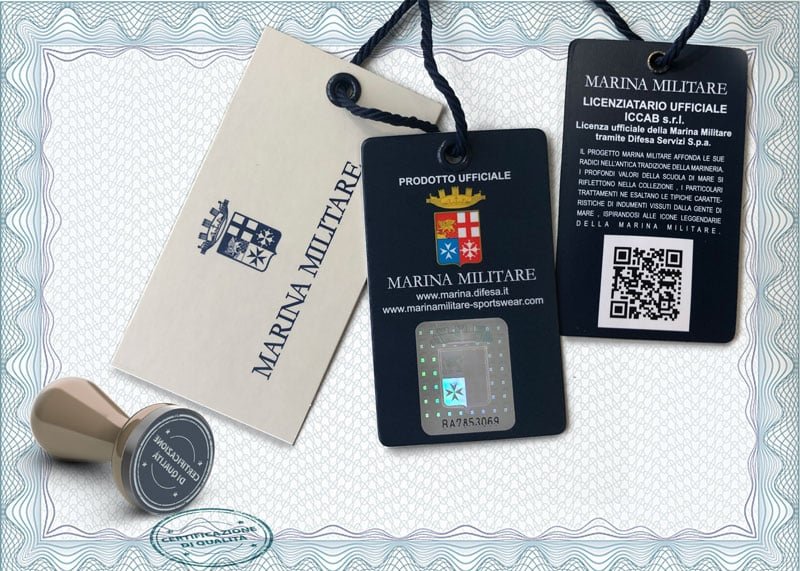
Official MARINA MILITARE SPORTSWEAR products are identified by an anti-counterfeiting hologram issued under a license granted by Difesa Servizi S.p.A., together with a hangtag bearing the wording “MARINA MILITARE – LICENZIATARIO UFFICIALE ICCAB SRL”.
These products are available exclusively in our stores, through our official online store at www.marinamilitare-sportswear.com and from retailers authorized by ICCAB S.R.L.
What to know before and after your purchase
Every garment has specific characteristics worth understanding to help you wear and care for it properly.
Knowing how to read this information helps you choose the right treatments and avoid processes that could damage the fabric, shape or details of a garment.
Composition label
Identifies the fibers used in a product and their percentages.
Care label
Provides instructions for washing, drying, ironing and any professional cleaning treatments.
Remember: the instructions on each garment’s own care label always take precedence over the general advice in this guide.
Care for your garments
Small everyday habits, more thoughtful Garment Care
Looking after your garments starts with everyday habits. Washing, drying, ironing and storing them correctly helps preserve their qualities and reduce avoidable wear and damage.
Different fabrics need different kinds of care. Always start by checking the instructions on the garment’s care label.
- 01
Before Washing
Check the garment’s care instructions, empty its pockets and pay attention to fastenings, embellishments and other details. Sort laundry by color and care requirements, then choose a wash program suitable for each item.
- 02
During Washing
Follow the maximum temperature and wash cycle shown on the label. Use a suitable detergent and follow the manufacturer’s recommended dosage. Avoid overloading the washing machine so garments can be cleaned effectively.
- 03
When Drying
Check whether the garment can be tumble-dried or requires another drying method. Follow any instructions to dry flat, hang to dry or dry in the shade.
- 04
When Ironing
Check the ironing symbol and permitted temperature. For garments with prints, embroidery or embellishments, look for any additional precautions.
- 05
When Storing
Store garments only when they are clean and completely dry. Depending on their material and construction, fold or hang them in a way that avoids stretching, misshaping or excessive compression.
One more tip: always check the care label, even when you are familiar with the fabric. Garments with similar compositions may still require different care.
Care symbols
Reading the care label
The symbols you will find on the care label and on each product page, grouped by type of treatment.
Washing9 symbols
 Machine wash normal
 Wash at or below 30°C
 Wash at or below 30°C. Wash with care
 Wash at or below 40°C
- Wash at or below 40°C. Wash with more care
 Wash at or below 60°C
 Wash at or below 90°C
 Hand wash only
 Do not wring
Bleaching3 symbols
 Bleach
 Non-chlorine bleach
 Do not bleach
Drying8 symbols
 Tumble dry normal
 Dry in the shade
 Drip dry in the shade
 Dry flat
 Tumble dry high heat
 Tumble dry medium heat
 Tumble dry low heat
 Do not tumble dry
Ironing5 symbols
 Do not iron
 Iron low temperature
 Iron medium temperature
 Iron high temperature
 Do not steam
Professional cleaning9 symbols
 Dry clean
 Any solvent
 Petroleum solvent only
 Any solvent except tetrachloroethylene
 Any solvent except tetrachloroethylene. Wash carefully
 Wet cleaning. Wash carefully
 No water. Dry clean
 Do not dry clean
 Do not dry clean with specific dry cleaning solvents
Know It. Choose It. Care for It.
Understanding your garments is the first step toward more thoughtful use
Learning how a collection comes to life, understanding a product’s composition and following the appropriate care instructions can help us pay closer attention to what we wear.
Through this guide, we aim to make information about the materials used in our collections easier to access and share practical advice on caring for Marina Militare Sportswear garments.
Because getting to know a product also means knowing how to care for it, store it and make the most of it in everyday life.
How to care for Cotton
Cotton may require different washing methods depending on the fabric structure, dyes and garment details. Always follow the temperature, wash cycle and drying instructions on the label.
How to care for Wool
Wool garments can be sensitive to heat, friction and mechanical agitation. Follow only the care method specified on the label; do not assume that machine washing is always suitable.
How to care for Polyester
Check the permitted temperatures and take particular care around heat sources when drying and ironing. Polyester garments may also feature trims or finishes that require special attention.
How to care for Padded Garments
Care requirements depend on the filling, outer fabric and construction of the garment. Follow all instructions on the label, especially those for washing and drying.
Discover the Marina Militare Sportswear World
Every collection expresses the brand’s identity through its materials, colors and distinctive details.
Explore our clothing and accessories, discover their features and check the composition and care information available for each product.